Which Hair Brush Suits the Way You Style?
The brush your stylist uses so easily can feel quite different when you are trying to reach the back of your own head.
A useful choice starts with the job: detangling, smoothing or shaping. At Absolute Hair, we can help you choose a tool you can handle comfortably and show you how it fits with your haircut and home routine.
Separate detangling from styling
Removing knots is a different task from creating tension around a brush during a blow-dry. Use a tool and method suited to your texture and the condition of your hair rather than pulling a styling brush through resistance.
Work gently from the ends towards the roots in manageable sections. If you have curls, talk with your stylist about when to detangle and how that affects the definition you want to keep. More brushing is not automatically better care.
For a smoother finish
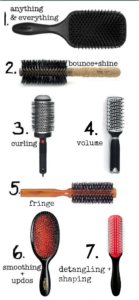
A flatter brush can be a practical option when you want to guide larger sections rather than build a pronounced curve. The size needs to feel manageable in your hand and suit the amount of hair you work with at once.
Check that the bristles feel comfortable and that you can move the brush without snagging. A brush that seems efficient in the shop may be awkward around your fringe or shorter layers. Choose for the parts of your hair you actually style.
For lift, bend and shape
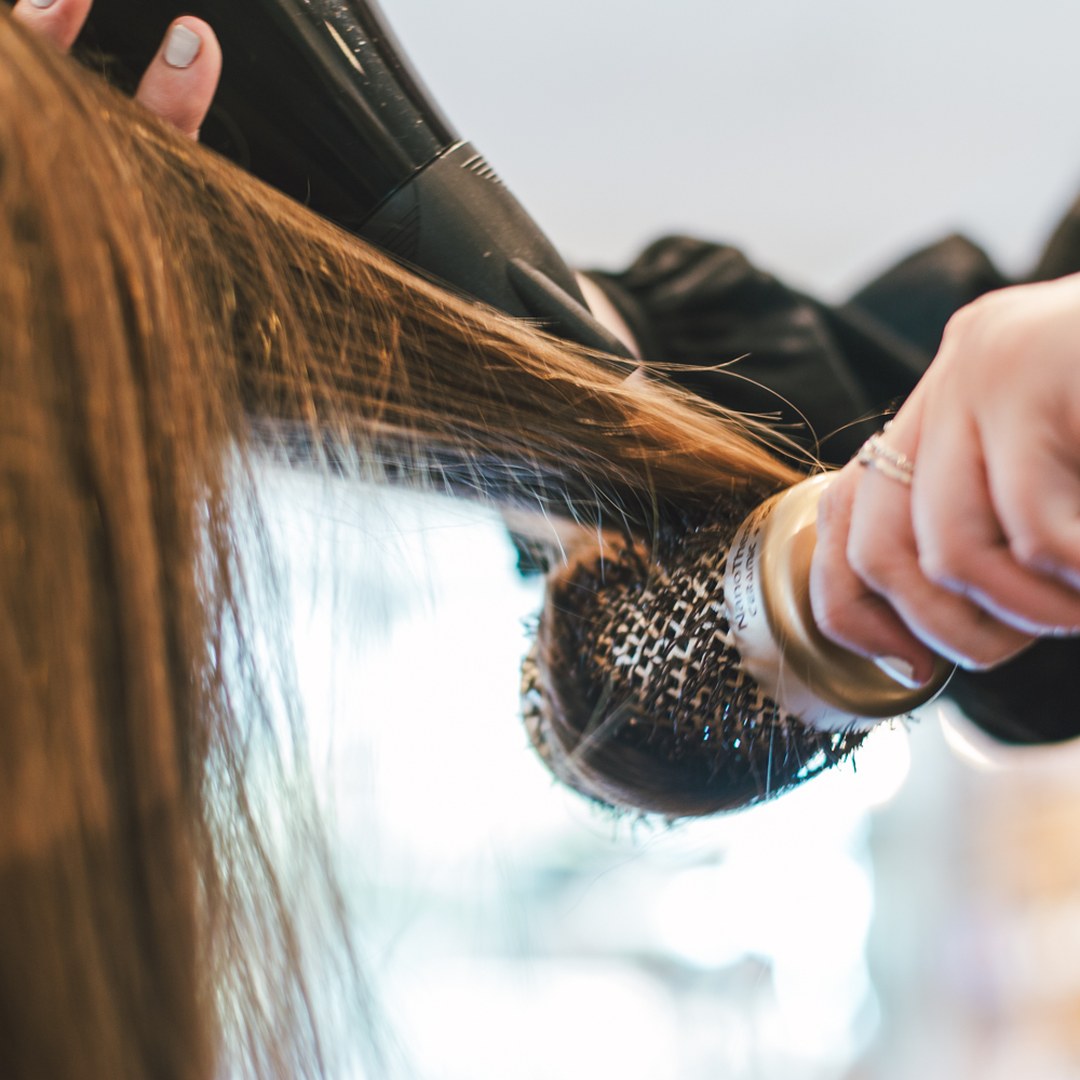
A round brush lets you shape hair around the barrel while drying. The barrel size affects the curve you can create, but your length, section size and technique matter too.
If your hair catches or winds too tightly, stop and release it carefully rather than pulling harder. Ask your stylist to demonstrate how much hair to pick up, where to hold the brush and how to unwind the section. You do not need the largest or smallest barrel to get a polished result.
Our blow-dry guide explains how sectioning, airflow and cooling support the shape.
Consider the handle as well as the head
Weight, grip and reach make a difference when you are styling yourself. Try holding the brush alongside your dryer and imagine using both around the sides and back of your head.
Tell us if your arms tire, the handle slips or you find the back difficult to control. A simpler technique and a comfortable tool can be more useful than collecting several specialist brushes.
Look after the brush you choose
Remove collected hair and follow the maker’s cleaning instructions. Different materials may need different care. Check for damaged bristles or rough parts that catch, and avoid using a brush that scratches your scalp.
At your next appointment, bring your brush or a photograph of it. We can show you what it does well, whether a different shape would help and how to use it for the finish you want.



Leave a Reply
Want to join the discussion?Feel free to contribute!