
Balayage, Foils or Ombré: What’s the Difference?
Found a colour you love, but every photograph seems to have a different name underneath it?
Balayage, foils, ombré, a colour melt. Some names describe the look, while others describe how your colourist creates it. You don’t need to arrive knowing which one to ask for. Use this guide as a starting point for your questions, then talk through the possibilities with your colourist.

Balayage: the traditional meaning and the modern interpretations
Balayage is a French term meaning sweeping. Traditionally, it describes painting colour onto selected sections of hair freehand, choosing where the lightness will sit rather than following one set pattern.
Today, the word is used and interpreted more broadly across the industry. A stylist may use freehand painting, foils or a combination to create the softly blended result you have in mind. You may hear the term foilyage when hand-painted sections are processed in foil.
The name alone does not tell us exactly how a colour was created. Show us what you like about a photograph: the brightness, the softness at the roots, the tone or the way the lighter pieces sit through the hair.
What do foils do?
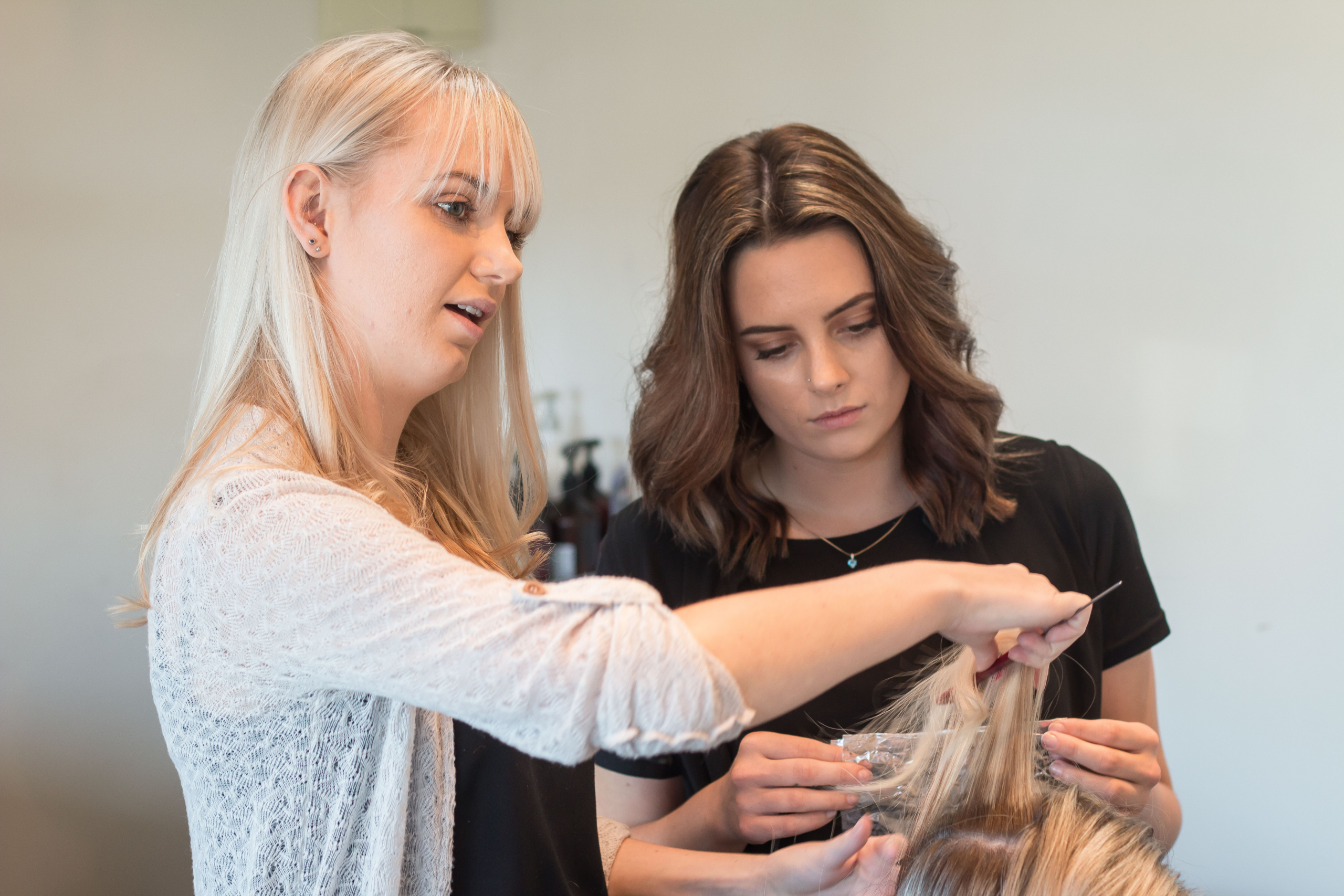
Foils separate selected sections of hair while the colour or lightener works. Fine sections can create a subtle blend, while different section sizes and placement can give a more noticeable result.
Foils are not limited to one finished look. They may be used for highlights, face-framing brightness or as part of a softer balayage-style result. Your colourist chooses the placement and approach for your starting hair and the look you want.
Ombré and sombré: the change through the lengths
Ombré usually describes a look that moves from deeper roots into lighter lengths and ends. Sombré describes a softer interpretation, with a more gradual change between the deeper and lighter areas.
These names help describe the effect rather than one compulsory way of creating it. Tell us how much contrast you enjoy and how soft you would like the transition to be.
What is a colour melt?
A colour melt blends shades into one another so there is no obvious line where one meets the next. It may bring together depth at the roots, a different tone through the middle and lighter ends.
Creating your colour and finishing the blend may involve more than one step. Your colourist may use colour, toner or gloss to bring the different areas together and create the finish you have chosen.
Why add a root tap, shadow root or root melt?
You may hear root tap, root shadow, shadow root or root melt. The names overlap and are not used in exactly the same way by every stylist.
A root tap generally describes applying colour, toner or gloss close to the roots to soften the blend. A shadow root or root melt may create more depth or blend that depth further through the hair, depending on the result you want.
This blending step may be used once the initial colour process is complete to help create the look you like. Toning and/or glossing through the lengths may also be part of finishing the overall colour result you want.
These techniques may be combined within one appointment or planned as separate services or visits. Each additional step can add time and cost. An experienced colourist should clearly explain the recommended process, what is achievable and how it fits your budget and timeframe before you begin.
Does lived-in colour mean less upkeep?
Lived-in blonde and low-maintenance colour often describe a softer, blended result designed to grow out less obviously. It is a look that can be created using several techniques, rather than one particular formula.
A softer root can make regrowth less noticeable, but the tone and condition still need looking after. You may need a toner or gloss refresh before you need more lightening. Grey coverage, if that is part of your goal, needs its own conversation too.
We will talk about how often you would like to visit, the time and investment you are comfortable with, and how to care for your colour at home. Our Balayage That Works With Your Everyday Hair guide looks more closely at placement, tone and upkeep between appointments.
Bring the look. We’ll help with the plan.
Bring two or three photographs and tell us what you like about them. Our experienced colourists can help you explore the possibilities and explain the best way to approach your own hair.
For a bigger colour change, correction or grey transition, our Detailed Colour Planning Consultation gives us time to talk through the options together.


Leave a Reply
Want to join the discussion?Feel free to contribute!